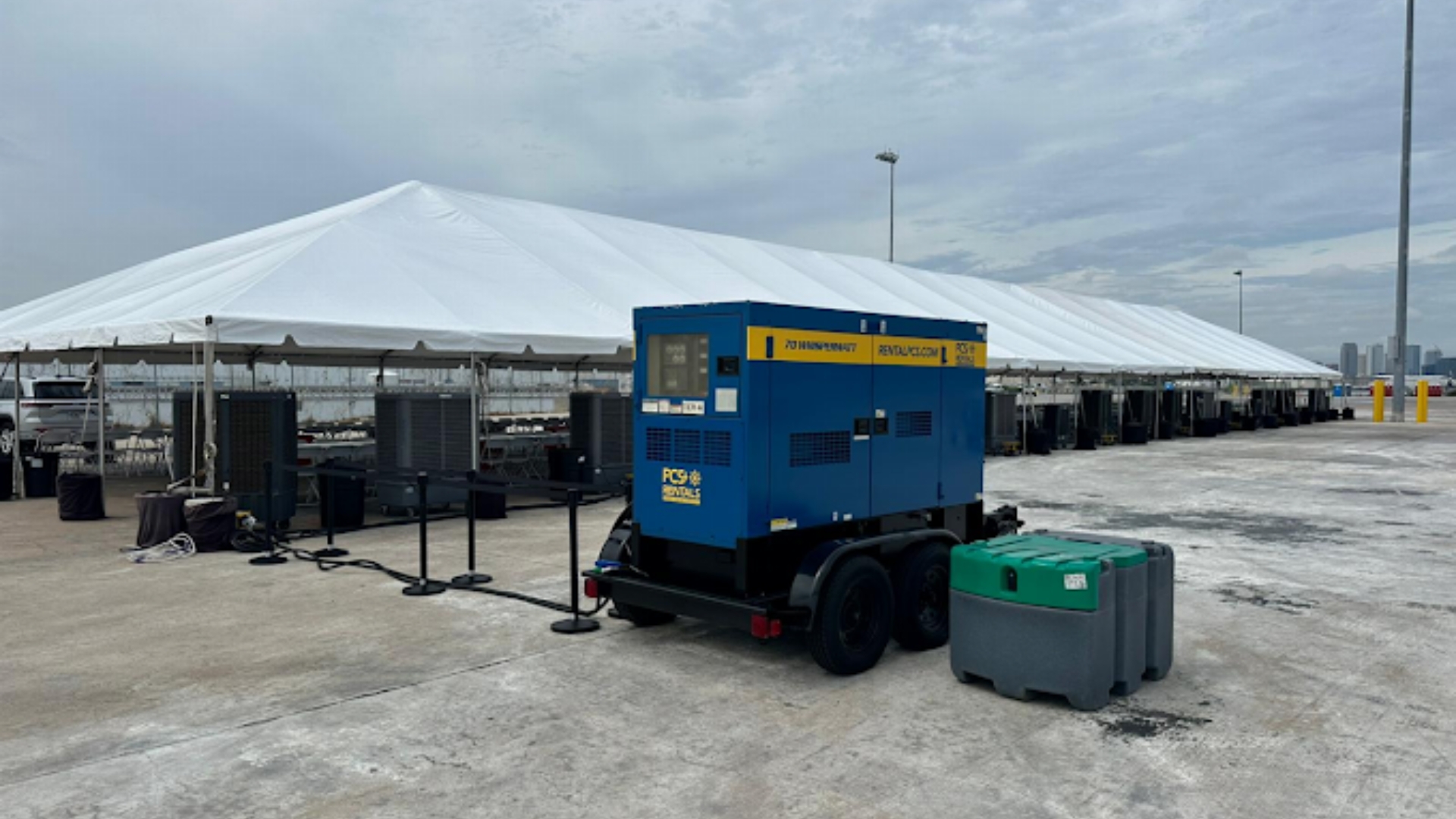
Picking a generator is a balancing act. Choose one that is too small and you risk overloads, tripped breakers, and downtime; choose one that is too large and you waste money and fuel on capacity you never use. Choosing the right generator size for your project needs comes down to understanding your power load and matching it to the correct unit. In this guide, we walk through the sizing method step by step and show how to apply it. At PCS Rentals, our fleet spans 3,000 watts to 150kW, and our team helps you land on the right size every time.
Why Choosing the Right Generator Size Matters for Your Project
Getting the size right is the difference between a project that runs smoothly and one that stalls. An undersized generator cannot keep up with your equipment, leading to overloads, tripped breakers, and even damaged tools or sensitive electronics. When power fails on a jobsite or at an event, work stops and costs climb. The right capacity ensures every load runs reliably from the first startup through the final hour.
Oversizing carries its own penalties. A generator far larger than your load costs more to rent, burns extra fuel, and can suffer engine wear when run at light loads for long periods. The goal is the sweet spot, a unit sized to handle your peak demand with sensible headroom, but not so large that you pay for power you never draw. We help you find that balance so your project stays efficient and dependable.
Understanding Generator Power: Watts, Kilowatts, and kVA
Generator sizing revolves around a few key units. Watts and kilowatts (kW) measure real power, the actual working output that runs your tools, lights, and machinery. A kilowatt is simply one thousand watts, and larger commercial generators are typically rated in kW. When you total the power your equipment draws, that figure in kilowatts becomes the baseline capacity you need from any generator you rent.
You may also see generators rated in kVA, or kilovolt-amperes, which measures apparent power. Because electrical systems are never perfectly efficient, kW and kVA are related through a power factor, commonly around 0.8 for commercial and industrial loads. In practical terms, a unit’s kVA rating is higher than its usable kW output. Understanding both figures helps you read spec sheets accurately, and our team is always ready to translate them for your project.
How to Calculate the Right Generator Size for Your Project
Sizing follows a repeatable, three-step method that anyone can work through with a little preparation. Gather your equipment details first, then follow the steps below to arrive at the capacity your project genuinely requires.
Step 1 — List Every Device and Its Running Watts
Start by inventorying everything the generator must power: tools, lighting, HVAC units, pumps, refrigeration, and any other equipment. Note each item’s running wattage, the continuous power it draws once operating, from the nameplate or owner’s manual. Add these figures together to find your total running load, the baseline your generator must sustain throughout the project without interruption.
Step 2 — Account for Starting (Surge) Watts
Many devices need far more power to start than to run. Motor-driven equipment like compressors, pumps, and air conditioners can pull two to three times their running wattage at startup. Identify the single item with the highest starting surge and add that surge figure to your total running watts, ensuring the generator can handle the peak moment when heavy equipment kicks on.
Step 3 — Add a Safety Margin and Convert to kW
With your running plus surge total in hand, add roughly twenty to twenty-five percent as a safety margin. This headroom covers efficiency losses, unexpected demand, and future needs. Convert the final figure to kilowatts and round up to the next available generator size. Our team helps confirm this calculation so you rent capacity that fits comfortably.
Matching Generator Size to Your Project Type
Different projects carry very different power profiles, and understanding typical ranges helps you plan before the exact math is done. Small jobsites, hand tools, lighting, and light commercial needs often run comfortably on compact portable generators like our 3,000-watt units. These are ideal when the load is modest and portability matters most, such as short-term work, small crews, or temporary power during maintenance.
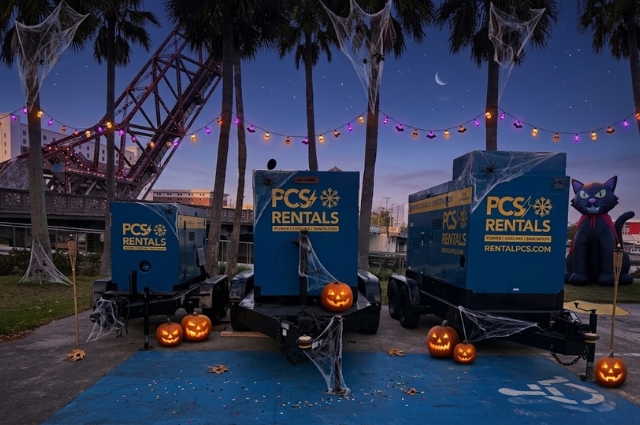
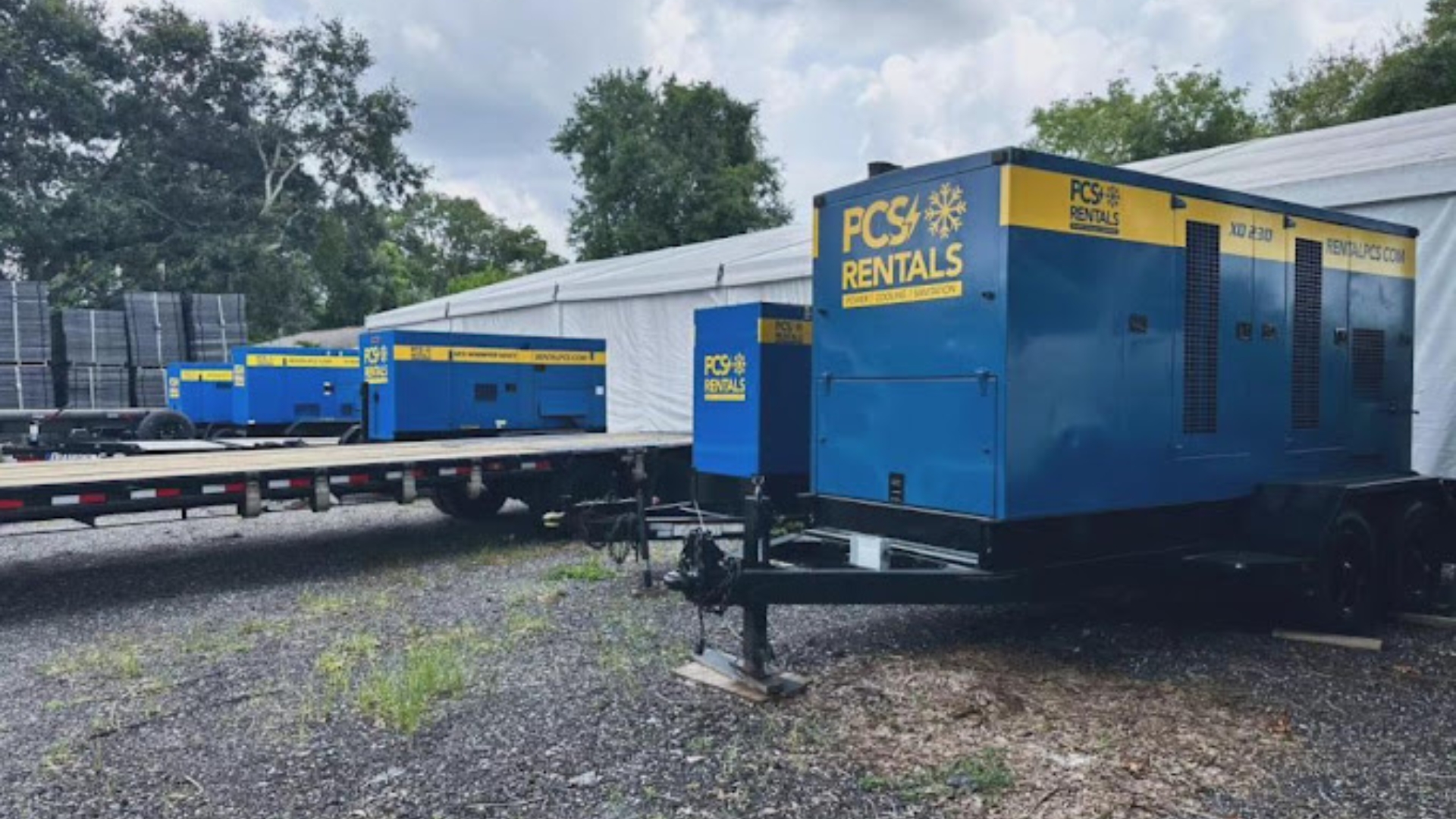
Larger operations demand more. Active construction sites and commercial buildings frequently call for mid-size towable diesel generators that deliver continuous, high-capacity output, while major industrial operations and high-demand sites rely on units up to our 150kW class. Events, healthcare facilities, and emergency backup each bring their own load profiles too. Whatever the application, we match the generator’s capacity to the real demands of your project rather than a rough guess.
Single-Phase vs. Three-Phase Power: Which Does Your Project Need?
Phase configuration is a sizing factor many people overlook, yet it matters as much as raw wattage. Single-phase power suits small businesses, light commercial applications, and most portable generator uses, where standard 120/240-volt equipment is the norm. It handles lighting, small tools, and everyday loads without complication, making it the common choice for smaller jobsites and temporary setups across South Tampa.
Three-phase power becomes essential for heavy industrial equipment and large motor loads that single-phase simply cannot support efficiently. Industrial facilities, large construction operations, and high-capacity machinery typically require it, often at higher voltages. Confirming whether your equipment needs single-phase or three-phase power, and the correct voltage, before renting prevents costly mismatches. Our knowledgeable team helps you verify these requirements so the generator you receive aligns perfectly with your equipment.
Fuel, Runtime, and Site Factors That Affect Generator Sizing
Sizing does not stop at wattage. Fuel type and runtime shape your choice too, especially for longer projects. Diesel generators are favored for large, continuous loads thanks to their fuel efficiency and endurance, making them well suited to construction and industrial work. For extended jobs, tank capacity and runtime determine how often refueling is needed, so factoring these in keeps your operation running smoothly without unplanned interruptions.
How you use the generator matters as well. A unit serving as your primary, or prime, power source should not run at maximum capacity continuously; sizing for roughly seventy to eighty percent of capacity protects performance and longevity. Standby applications allow for tighter sizing. Site conditions, access, and load type all play a role too. Our portable, diesel, and towable generators are regularly maintained, so whatever configuration your project calls for, dependable performance comes standard.
How PCS Rentals Helps You Choose the Right Generator Size
You do not have to work through the calculations alone. Our knowledgeable team helps you select the right generator based on your power requirements and the specifics of your site, ensuring you have reliable and sufficient electricity. Share the equipment you need to run, your voltage needs, and your fuel preferences, and we translate that into the correct capacity, drawing from a fleet that spans 3,000 watts to 150kW.
From there, the process stays simple. Every rental begins with a free estimate, so you see the right-sized unit and its cost before committing. We provide delivery and professional setup throughout the Tampa Bay area, covering Hillsborough and Pinellas counties, and our experienced team remains available twenty-four seven for support during your rental. With PCS Rentals, choosing the right generator size becomes a guided decision rather than a guessing game.
FAQs About Choosing the Right Generator Size
Here are quick answers to the sizing questions we hear most often. For a precise recommendation tailored to your equipment and site, our team is always happy to walk through the numbers with you.
How do I calculate what size generator I need for my project?
List every device you plan to power and total their running watts, add the highest starting surge, then add a twenty to twenty-five percent safety margin. Convert the total to kilowatts and round up. Our team gladly helps confirm your calculation before you rent.
What’s the difference between running watts and starting watts?
Running watts are the continuous power a device uses while operating, while starting watts are the extra surge motor-driven equipment needs to start, often two to three times higher. Both matter, since your generator must handle peak startup demand plus the ongoing running load.
What happens if I choose a generator that’s too small?
An undersized generator cannot meet your power demand, causing overloads, tripped breakers, and potential damage to equipment or electronics. It may shut down under load, halting your project. Sizing correctly with a safety margin prevents this, and our team helps ensure you rent enough capacity.
Do I need single-phase or three-phase power?
Single-phase power suits small businesses, light commercial needs, and most portable applications, while three-phase is essential for heavy industrial equipment and large motor loads. Confirming your equipment’s requirement before renting avoids mismatches, and our team helps you verify the correct phase and voltage.
Can PCS Rentals help me determine the right generator size?
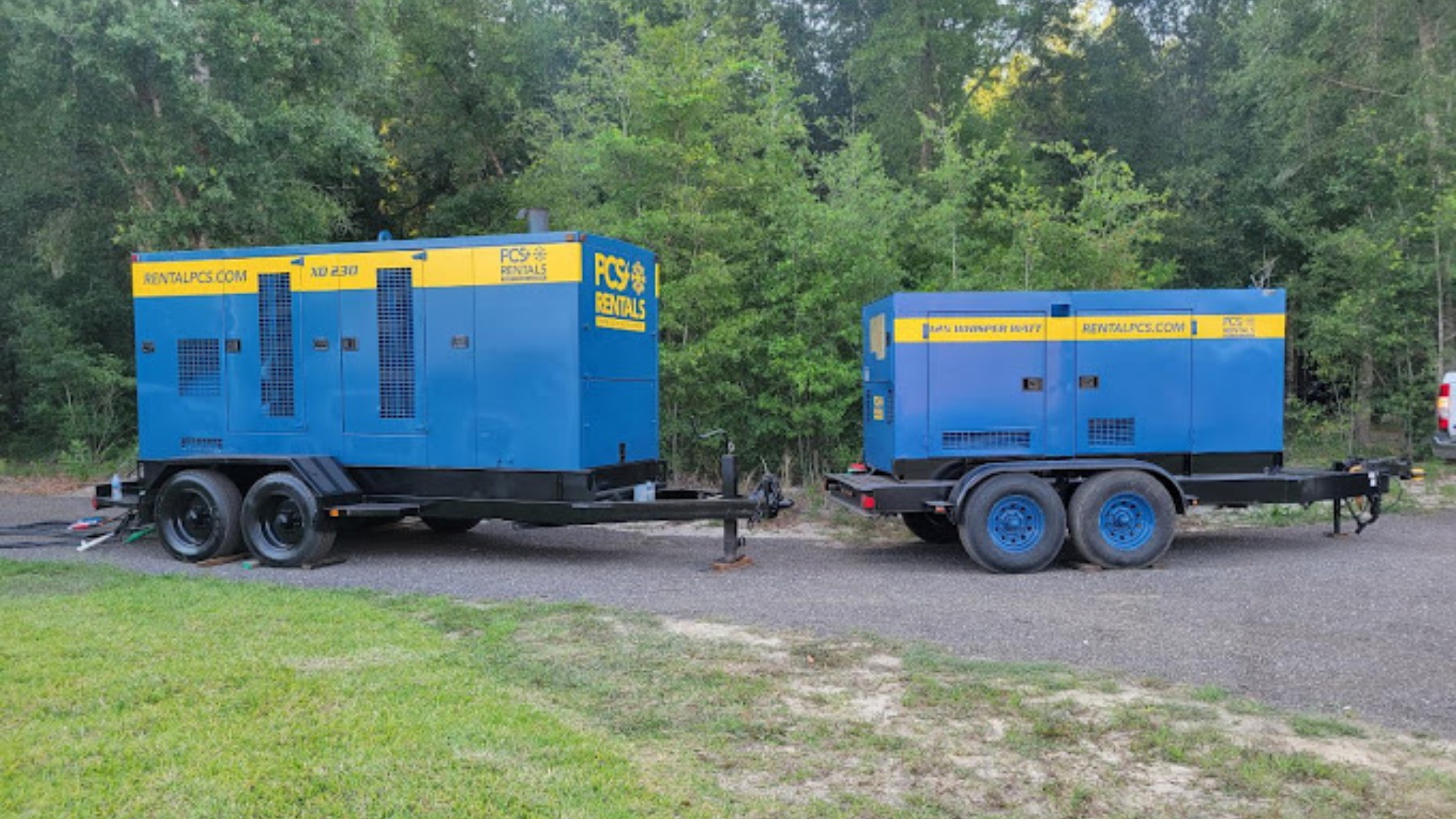
Absolutely. Our knowledgeable team helps you select the right generator based on your total power needs, voltage requirements, and site specifics. With a fleet from 3,000 watts to 150kW and free estimates, we make sure you get properly sized, reliable power for your project.
Conclusion: Get the Right-Sized Generator for Your Project with PCS Rentals
Choosing the right generator size for your project needs comes down to a clear method: inventory your loads, add the highest surge, apply a safety margin, and match the result to the correct unit. At PCS Rentals, we simplify every step with expert sizing help, a fleet spanning 3,000 watts to 150kW, delivery and professional setup, and twenty-four-seven support. Skip the guesswork and the risk of an ill-fitting unit. Contact us today for a free estimate and power your project with confidence.